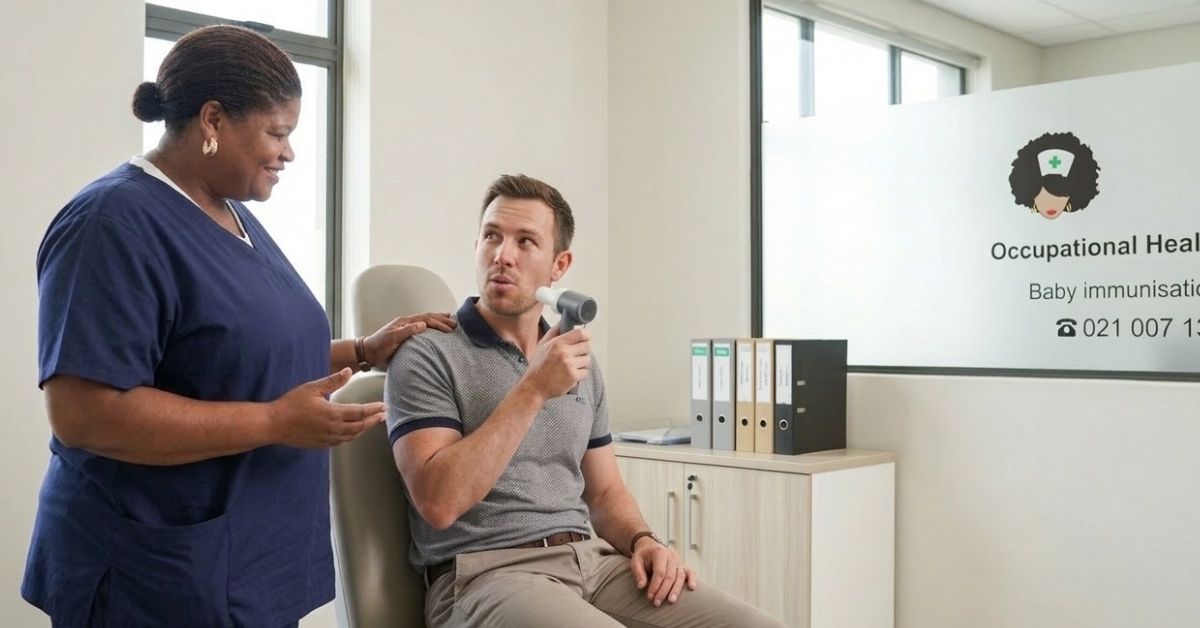
There is a model of healthcare that has been quietly proven, rigorously researched and consistently undervalued in South Africa. It is not a new technology. It is not an expensive drug. It is not a government programme waiting for budget approval.
It is the professional nurse.
And in Wesbank, Kuilsriver and Eerste River, Nurseit is demonstrating what happens when you put that model at the centre of a community health strategy.
What Is Nurse-Led Primary Care and Why Does It Work?
Nurse-led primary care is exactly what it sounds like. It is a model of healthcare delivery where qualified, experienced nurses are the primary point of clinical contact for patients. They assess, diagnose, treat, prescribe within their scope of practice, refer when necessary and manage ongoing care relationships with patients over time.
This is not a compromise model. It is not “healthcare for people who cannot afford a real doctor.” It is a clinically validated, internationally recognised approach to primary healthcare that consistently delivers outcomes equivalent to or better than GP-led care for the vast majority of primary health needs.
The evidence is substantial. A landmark study published in the Lancet found that nurse practitioners provided care of equivalent quality to physicians for a wide range of primary care conditions, with higher patient satisfaction scores in several categories. The World Health Organization has repeatedly identified nurse-led primary care as one of the most cost-effective strategies for achieving universal health coverage in middle-income countries.
South Africa is a middle-income country with a primary healthcare crisis. The solution has been available all along.
The State of Primary Healthcare in the Northern Suburbs of Cape Town
To understand why Nurseit matters, you need to understand the health landscape of the communities it serves.
Wesbank, Kuilsriver and Eerste River sit within the Tygerberg sub-district of the Western Cape, one of the most densely populated and health-burdened areas in the province. The communities here carry what researchers call the “quadruple burden of disease”: infectious diseases including HIV and TB, non-communicable diseases including hypertension and diabetes, maternal and child health challenges, and violence and injury-related trauma.
The Western Cape Government Department of Health acknowledges that the public primary healthcare system in high-density urban areas is operating under severe strain. Facility utilisation rates are consistently above capacity. Staff-to-patient ratios are stretched. Waiting times are long. The system is doing its best, but its best is not enough for the volume of need it faces.
Into this environment, Nurseit has positioned itself as a professional, accessible, affordable alternative that absorbs primary care demand and delivers it at a standard that the communities of Wesbank, Kuilsriver and Eerste River deserve.
The Nurseit Philosophy: Healthcare as a Community Right, Not a Privilege
The founding philosophy of Nurseit is not complicated, but it is radical in the South African context.
Healthcare is a right. Not a privilege. Not a reward for having medical aid. Not something you earn by being able to afford a private GP. A right.
The South African Constitution enshrines the right to access healthcare services in Section 27. But constitutional rights mean nothing without the infrastructure to make them real. Nurseit is that infrastructure for Wesbank, Kuilsriver and Eerste River.
By positioning professional, nurse-led primary care in the communities that need it most, at prices that reflect the economic reality of those communities, Nurseit is doing something that neither the public nor the private sector has managed to do consistently: making quality healthcare genuinely accessible.
This is not charity. Nurseit is a sustainable, professional healthcare business. But it is a business built on the conviction that sustainability and accessibility are not mutually exclusive. You can run a financially viable clinic and still charge prices that working families in Wesbank can afford. Nurseit proves this every day.
What Makes Nurseit Different From Every Other Clinic Option in the Northern Suburbs?
There are three categories of healthcare available to residents of Wesbank, Kuilsriver and Eerste River. Understanding the difference between them explains exactly why Nurseit occupies a unique and critical position.
Category 1: Government Clinics and Day Hospitals
Free at the point of use. Staffed by dedicated professionals. But chronically overstretched, with waiting times that make consistent primary care practically impossible for working adults. The public system is essential and irreplaceable, but it cannot meet the full primary care demand of the Northern Suburbs on its own.
Category 2: Private GPs and Private Hospitals
High clinical standard. Short waiting times. But priced for patients with comprehensive medical aid or significant disposable income. A private GP consultation in Cape Town costs between R600 and R1,200. A private hospital emergency visit can cost R5,000 to R20,000. For the majority of residents in Wesbank and Eerste River, this is not a realistic option for routine primary care.
Category 3: Nurseit
Professional clinical standard. Minimal waiting times. Priced for accessibility. Located in the community. This is the gap that Nurseit fills. It is the middle path that has been missing from the Northern Suburbs healthcare landscape.
Nurseit is not trying to replace the public system. It is not trying to compete with private hospitals. It is filling a specific, critical gap that has left thousands of Northern Suburbs residents without a viable primary care option.
The Nurseit Team: Who Is Treating You and Why It Matters
The quality of any healthcare service is ultimately determined by the quality of the people delivering it.
Nurseit’s clinical team consists of qualified, registered nurses with experience in primary healthcare, occupational health, wound care, chronic disease management and women’s health. These are not recent graduates finding their feet. These are experienced clinicians who have chosen to work in community health because they believe in what Nurseit is doing.
The South African Nursing Council (SANC) sets the registration and competency standards for all nurses practicing in South Africa. Every Nurseit nurse meets these standards. Every consultation is conducted within a defined scope of practice that ensures patient safety and clinical quality.
Beyond qualifications, the Nurseit team brings something that cannot be credentialed but is equally important: community understanding. These nurses know the health challenges of Wesbank, Kuilsriver and Eerste River. They understand the social determinants of health that shape the lives of their patients. They treat people, not just conditions.
Occupational Health in Kuilsriver: The Workforce Deserves Better
The Kuilsriver and Blackheath industrial corridors represent one of the most significant employment hubs in the Northern Suburbs of Cape Town. Thousands of workers are employed in manufacturing, food processing, logistics, construction and related industries within a few kilometres of Nurseit’s service area.
These workers face specific occupational health risks that require professional management. Noise-induced hearing loss from industrial environments. Respiratory conditions from chemical and dust exposure. Musculoskeletal injuries from manual handling. Skin conditions from chemical contact. The list is long and the consequences of unmanaged occupational health risks are serious for both workers and employers.
The Occupational Health and Safety Act (OHSA) places clear obligations on South African employers to manage the health and safety of their workforce. Compliance requires access to professional occupational health services. For many small and medium-sized businesses in the Kuilsriver area, the cost and logistics of accessing those services through private hospitals or specialist occupational health providers has been a barrier.
Nurseit removes that barrier.
Nurseit’s occupational health services include pre-employment medicals, periodic health surveillance, fitness-for-duty assessments, injury on duty (IOD) management, return-to-work evaluations and OHSA compliance support. These services are delivered by qualified nurses with occupational health training, at prices that make compliance achievable for businesses of all sizes.
For workers, this means access to professional occupational health care without losing a day of wages. For employers, it means a healthier workforce, reduced absenteeism and OHSA compliance without the cost of a specialist occupational health provider.
Women’s Health in Wesbank and Eerste River: Closing the Gap
Women in the Northern Suburbs of Cape Town carry a disproportionate share of the community health burden. They are often the primary caregivers for children and elderly family members while simultaneously managing their own health needs. And their own health needs are frequently deprioritised.
Cervical cancer is one of the most preventable cancers in the world, yet it remains one of the leading causes of cancer death among South African women. The Cancer Association of South Africa (CANSA) reports that late-stage diagnosis is the primary driver of cervical cancer mortality, and late-stage diagnosis is almost always the result of inadequate screening access.
A Pap smear takes fifteen minutes. It can detect pre-cancerous changes years before they become cancer. But for a woman in Wesbank who faces a six-hour queue every time she needs primary care, that fifteen-minute test becomes a day-long ordeal that gets postponed indefinitely.
Nurseit makes women’s health services accessible, affordable and dignified. Pap smears, breast health assessments, family planning consultations, antenatal guidance and menstrual health support are all available at Nurseit. Women in Wesbank, Kuilsriver and Eerste River can access these services without the barriers of long queues, unaffordable fees or the indignity of an overstretched public system.
This is not a small thing. This is potentially life-saving.
The Economic Case for Investing in Community Primary Care
The argument for community-based primary care like Nurseit is not just moral. It is economic.
Research from the South African Medical Research Council consistently demonstrates that every rand invested in primary care generates between R4 and R8 in downstream savings through reduced hospitalisation, fewer emergency interventions and lower chronic disease complications.
When Nurseit manages a hypertensive patient in Wesbank consistently over twelve months, the probability of that patient presenting at Tygerberg Hospital with a stroke decreases significantly. When Nurseit screens a worker in Kuilsriver and identifies pre-diabetes early, the probability of that worker requiring dialysis in ten years decreases significantly. These are not hypothetical outcomes. They are the documented results of effective primary care.
The National Health Insurance (NHI) framework, which South Africa is in the process of implementing, explicitly recognises the role of accredited private primary care providers in supplementing public capacity. Nurseit’s model is precisely the kind of community-based, nurse-led primary care that the NHI framework envisions as a complement to the public system.
Investing in Nurseit is not just good for individual patients. It is good for the Northern Suburbs economy, good for the Western Cape health system and good for South Africa.
How Nurseit Is Building Long-Term Community Health in the Northern Suburbs
The vision for Nurseit extends beyond individual consultations. It is about building a culture of health in Wesbank, Kuilsriver and Eerste River that changes the relationship between these communities and healthcare.
When a child in Eerste River grows up knowing that professional healthcare is accessible and affordable in their neighbourhood, their relationship with the health system is fundamentally different from that of a child who only ever experienced six-hour queues and overstretched facilities. That child is more likely to seek care early, more likely to manage chronic conditions proactively and more likely to pass those health behaviours on to their own children.
This is the long game. And Nurseit is playing it.
By being consistently present, consistently professional and consistently affordable in the communities of Wesbank, Kuilsriver and Eerste River, Nurseit is not just treating illness. It is building health literacy, health confidence and health culture in communities that have historically been underserved by both the public and private healthcare sectors.
Frequently Asked Questions About Nurse-Led Primary Care at Nurseit
For the vast majority of primary healthcare needs, yes. Research published in the Lancet and endorsed by the World Health Organization confirms that nurse practitioners deliver care of equivalent quality to physicians for most primary care conditions. Nurseit’s nurses are trained, registered professionals who follow evidence-based clinical protocols. For conditions requiring specialist or hospital-level care, Nurseit will refer appropriately.
Pharmacy clinics typically offer a limited range of services focused on minor ailments and medication dispensing. Nurseit is a full-spectrum primary healthcare clinic offering chronic disease management, wound care, occupational health, women’s health, health screenings and acute illness treatment. The clinical depth and range of services at Nurseit is significantly greater than a pharmacy clinic.
Yes. Nurseit provides primary care for patients of all ages including children. Paediatric consultations, immunisation support, growth monitoring and acute illness management for children are all within Nurseit’s scope of service.
Nurseit is a primary care clinic, not an emergency facility. For life-threatening emergencies, patients should call 10177 (Western Cape Emergency Medical Services) or proceed to the nearest emergency department. Nurseit will provide initial stabilisation and facilitate appropriate referral for urgent cases that present at the clinic.
Contact Nurseit directly to discuss home visit availability for patients who are unable to attend the clinic in person.
Walk-in registration is available at all Nurseit clinics. Bring your ID document and any existing medical records or medication lists. No appointment is necessary for most services, though appointments can be made for specific consultations.
Nurseit’s team reflects the linguistic diversity of the Northern Suburbs communities it serves. Afrikaans, English and Xhosa are spoken within the clinical team. Contact the clinic to confirm language availability for specific consultations.
The Future of Healthcare in Wesbank, Kuilsriver and Eerste River
The future of healthcare in the Northern Suburbs of Cape Town is not going to be built by government policy alone. It is not going to be built by corporate hospital groups whose business model requires medical aid membership. It is going to be built by community-rooted, professionally staffed, accessibly priced clinics that show up every day for the people who need them most.
Nurseit is that future. Right now. In Wesbank, Kuilsriver and Eerste River.
The research is clear. The need is documented. The model is proven. The only question is whether the communities of the Northern Suburbs know that this option exists.
Now you know.
Nurseit. Professional care. Accessible prices. Your community. Your health.
Visit Nurseit today | Explore our full range of services | Contact us for occupational health enquiries