There is a health crisis unfolding in the Northern Suburbs of Cape Town. It does not make headlines. It does not shut down roads or fill emergency rooms overnight. It moves slowly, quietly and with devastating precision through families in Wesbank, Kuilsriver and Eerste River.
It is the crisis of unmanaged chronic disease. And it is entirely preventable.
What the Data Says About Chronic Disease in the Western Cape
The numbers are not comfortable reading.
The Western Cape Government Department of Health reports that hypertension affects approximately 1 in 3 adults in the province. Diabetes affects roughly 1 in 10. Both conditions are significantly more prevalent in lower-income communities where access to regular monitoring and medication management is inconsistent.
The Heart and Stroke Foundation South Africa describes hypertension as “the silent killer” because most people with high blood pressure have no symptoms until they experience a stroke, heart attack or kidney failure. By the time the emergency happens, years of preventable damage have already been done.
In communities like Wesbank and Eerste River, where the socio-economic pressures of unemployment, food insecurity and environmental stressors are compounded by limited access to affordable primary care, the chronic disease burden is not just a health issue. It is a social and economic emergency.
Why Chronic Disease Goes Unmanaged in High-Density Communities
Understanding why chronic disease is so poorly managed in communities like Kuilsriver and Wesbank requires honest engagement with the structural barriers that exist.
The queue problem. Managing a chronic condition like hypertension or diabetes requires regular monitoring, medication reviews and lifestyle support. In the public system, each of those visits means another 4 to 8 hour wait. For a working adult, that is not sustainable. People skip visits. Medication runs out. Conditions deteriorate.
The cost problem. Private GP consultations for chronic disease management in Cape Town typically cost between R600 and R1,200 per visit. For a family in Wesbank living on a combined household income of R8,000 to R15,000 per month, that is not a realistic option for monthly monitoring.
The awareness problem. Many people in the Northern Suburbs do not know they have hypertension or pre-diabetes because they have never been screened. You cannot manage a condition you do not know you have. The South African Medical Research Council estimates that up to 50% of South Africans with hypertension are undiagnosed.
The continuity problem. Chronic disease management requires a consistent relationship with a healthcare provider who knows your history. In an overstretched public system where you see a different nurse or doctor at every visit, that continuity is almost impossible to achieve.
Nurseit solves all four of these problems simultaneously.
What Happens When Chronic Disease Goes Untreated: The Real Cost to Families
The human cost of unmanaged chronic disease in communities like Eerste River and Wesbank is measured in strokes, amputations, dialysis and early death.
A person with uncontrolled hypertension is three times more likely to suffer a stroke than someone with well-managed blood pressure. A person with uncontrolled diabetes faces a dramatically elevated risk of kidney failure, blindness and lower limb amputation. These are not abstract statistics. These are the outcomes that are playing out in families across the Northern Suburbs right now.
The economic consequences are equally devastating. When the primary breadwinner in a Wesbank household suffers a stroke at 52, the entire family’s financial stability collapses. Children leave school. Debt accumulates. The ripple effects of one preventable health event can define a family’s trajectory for a generation.
Research published in the South African Medical Journal consistently shows that every rand invested in primary care and chronic disease management saves between R4 and R8 in downstream hospital and emergency care costs. Prevention is not just morally right. It is economically rational.
How Nurseit Approaches Chronic Disease Management Differently
Nurseit’s approach to chronic disease management is built on four principles that directly address the barriers described above.
Accessibility without compromise. Nurseit’s clinics in Wesbank, Kuilsriver and Eerste River are positioned where patients actually live. There is no long commute to a private hospital. There is no six-hour queue. You arrive, you are seen, you leave with a clear plan. That accessibility removes the single biggest barrier to consistent chronic disease management.
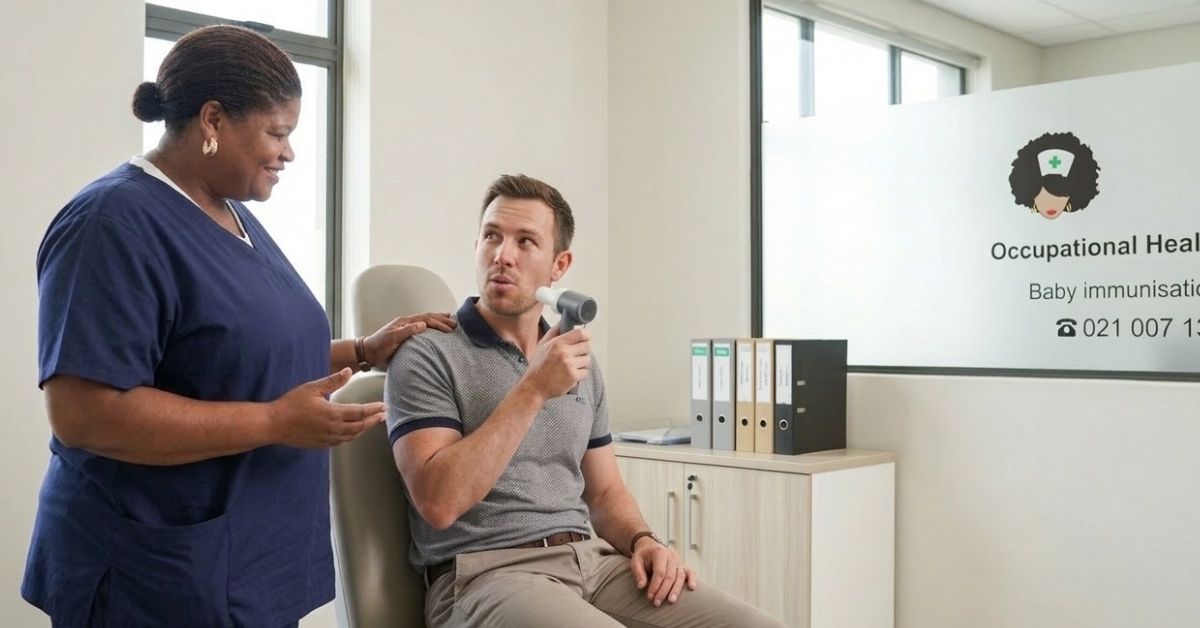
Professional clinical standard. Nurseit’s nurses are not generalists doing their best with limited resources. They are trained primary healthcare professionals who follow evidence-based protocols for chronic disease monitoring and management. Blood pressure readings, glucose monitoring, medication reviews and lifestyle counselling are conducted with the same clinical rigour you would expect from any private healthcare provider.
Affordable pricing. Nurseit’s chronic disease management services are priced to be accessible to patients without medical aid. This is a deliberate and non-negotiable part of the Nurseit model. Quality chronic care should not be a privilege reserved for those who can afford R1,000 per month in consultation fees.
Continuity of care. When you register as a chronic patient at Nurseit, you build a relationship with a clinical team that knows your history, tracks your progress and adjusts your management plan over time. This continuity is what makes chronic disease management effective. It is what the public system, through no fault of its own, struggles to provide.
The Specific Chronic Conditions Nurseit Manages in Kuilsriver, Wesbank and Eerste River
Hypertension (High Blood Pressure)
Regular blood pressure monitoring, medication management, dietary counselling and cardiovascular risk assessment. Nurseit provides the consistent, professional oversight that keeps hypertension controlled and prevents the catastrophic events that uncontrolled blood pressure causes.
Type 2 Diabetes
Blood glucose monitoring, HbA1c tracking, medication reviews, foot care assessments and dietary guidance. Nurseit’s diabetes management programme is designed to keep patients stable, informed and empowered to manage their condition between visits.
Asthma and Respiratory Conditions
Inhaler technique assessment, peak flow monitoring, trigger identification and medication management. Given the environmental factors in the Kuilsriver and Blackheath industrial areas, respiratory health is a significant concern for many residents.
Obesity and Metabolic Syndrome
BMI assessment, nutritional counselling, weight management support and metabolic risk screening. Obesity is a primary driver of both hypertension and diabetes, and addressing it proactively is central to Nurseit’s preventive care model.
Thyroid Conditions
Thyroid function monitoring and medication management for patients with hypothyroidism or hyperthyroidism.
Cholesterol Management
Lipid profile monitoring and cardiovascular risk reduction counselling for patients with elevated cholesterol.
Preventive Screening: Catching Problems Before They Become Crises
One of the most powerful things Nurseit does is screen for conditions that patients do not yet know they have.
A blood pressure check takes three minutes. A fasting glucose test takes ten. A cholesterol screening takes fifteen. These are not complicated procedures. But they are the difference between catching a problem early and discovering it in an emergency room.
Nurseit offers comprehensive health screenings that include:
- Blood pressure measurement
- Blood glucose testing (fasting and random)
- Cholesterol and lipid profile
- BMI and body composition assessment
- Urine dipstick analysis
- HIV and TB screening
- Pap smears and cervical cancer screening
For communities in Wesbank, Kuilsriver and Eerste River where access to regular screening has historically been limited by queue times and cost, these services represent a genuine shift in what preventive healthcare looks like at community level.
The World Health Organization identifies early detection and management of non-communicable diseases as one of the highest-impact interventions available in primary healthcare. Nurseit is delivering that intervention where it is needed most.
The Occupational Health Dimension: Chronic Disease and the Kuilsriver Workforce
The Kuilsriver and Blackheath industrial corridors are home to a significant working population employed in manufacturing, logistics, food processing and construction. Many of these workers are managing chronic conditions while performing physically demanding jobs.
Unmanaged hypertension in a forklift operator is not just a personal health risk. It is a workplace safety risk. Uncontrolled diabetes in a construction worker affects concentration, wound healing and physical endurance. The intersection of chronic disease and occupational health is a critical and underserved area in the Northern Suburbs.
Nurseit’s occupational health services address this intersection directly. Pre-employment medicals that screen for chronic conditions, fitness-for-duty assessments and ongoing chronic disease management for employed patients are all part of the Nurseit offering. Employers in the Kuilsriver area benefit from a healthier, more productive workforce. Workers benefit from professional care that keeps them employed and earning.
Frequently Asked Questions About Chronic Disease Management at Nurseit
The frequency of visits depends on your specific condition and how well it is controlled. Most chronic patients benefit from monthly or quarterly monitoring visits. Nurseit’s clinical team will recommend a schedule based on your individual health profile.
Nurseit’s professional nurses operate within a defined scope of practice that includes prescribing and managing chronic medication under appropriate protocols. For complex medication requirements, Nurseit will coordinate with a supervising medical officer or refer appropriately.
Nurseit can work alongside your existing treatment plan. Bring your current medication list and any recent test results to your first consultation. Nurseit’s team will assess your current management and identify any gaps or opportunities for improvement.
Nurseit works with a range of medical aid schemes. Contact the clinic directly to confirm whether your specific scheme is accepted. Patients without medical aid are welcome and will be charged at Nurseit’s accessible self-pay rates.
Many people with hypertension and pre-diabetes have no symptoms. The only way to know is to be tested. Nurseit offers walk-in health screenings that can identify these conditions quickly and affordably. If you have not been screened recently, this is the most important health decision you can make today.
Yes. Chronic disease management at Nurseit includes practical dietary guidance and lifestyle counselling tailored to the realities of life in the Northern Suburbs. This is not generic advice. It is contextually relevant support that acknowledges the food environment, budget constraints and lifestyle factors specific to communities in Wesbank, Kuilsriver and Eerste River.
The Bigger Picture: What Happens When a Community Gets Healthy
When chronic disease is well-managed at community level, the effects ripple outward in ways that go far beyond individual health outcomes.
Fewer emergency admissions mean less pressure on Tygerberg Hospital and Karl Bremer Hospital. Fewer strokes and amputations mean more parents present in their children’s lives. Better-managed diabetes means fewer days of sick leave and more productive workers in the Kuilsriver industrial economy. Healthier communities are more economically active, more socially stable and more resilient.
This is what Nurseit is building in Wesbank, Kuilsriver and Eerste River. Not just a clinic. A healthier community. One consultation at a time.
The National Department of Health’s primary healthcare re-engineering strategy identifies community-based chronic disease management as a national priority. Nurseit is not waiting for the system to catch up. It is already doing the work.
Take the First Step Today
If you have not had your blood pressure or blood glucose checked in the last six months, today is the day to change that.
If you are managing a chronic condition and struggling with the queue times and costs of the public system, there is a better option available to you right now.
If you are an employer in the Kuilsriver area and you want a healthier, more productive workforce, Nurseit’s occupational health services are designed for exactly that.
The hidden health crisis in Wesbank, Kuilsriver and Eerste River is real. But it is not inevitable.
Book your chronic disease screening at Nurseit | Learn about our full range of services